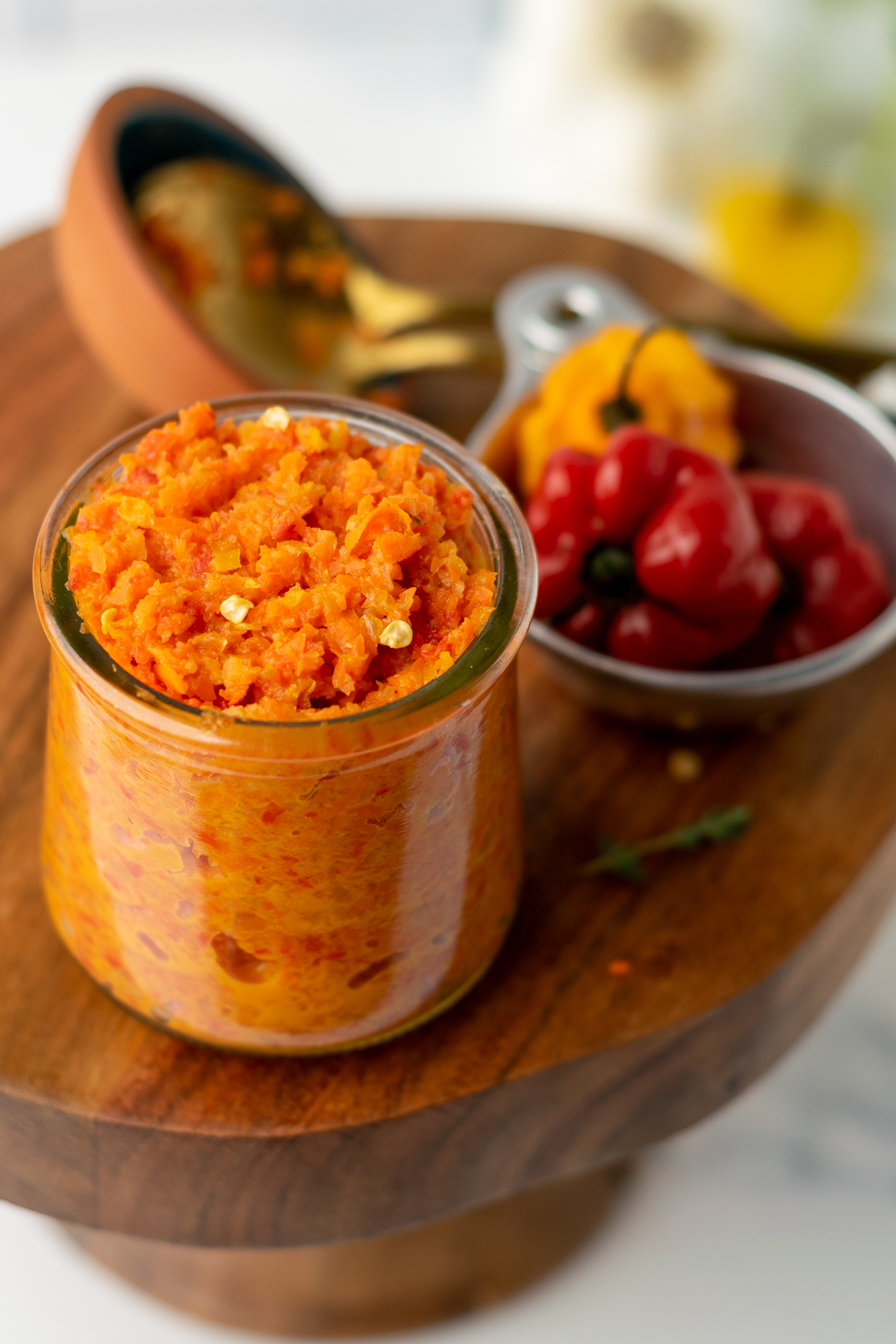
Ingredients
- 10-12 scotch bonnet peppers, stems, seeds, and membranes removed, chopped up
- 2 cloves garlic, unpeeled and pan-roasted
- ½ cup yellow onion,(about 1/2 medium-sized onion) chopped up
- ½ cup carrots, (about 2 medium size carrots), chopped up
- 1 tablespoon salt
- 1 tablespoon sugar
- 1 tablespoon white vinegar
- 2 tablespoon extra virgin olive oil
Instructions
- Begin by preheating a dry large-sized skillet over medium-high heat.
- To prepare your garlic, separate two garlic cloves from the head but leave the skin on. For the first option, place the garlic cloves directly in the preheated skillet and turn them occasionally to ensure even roasting. Watch for the skin to turn a golden-brown color and for the cloves to become soft and caramelized, which should take about 5-7 minutes. If you are using a cast iron skillet or another heavy-bottomed pan, the garlic cloves may also become slightly charred during the roasting process. To avoid this, you can check on the garlic occasionally and turn them to ensure even roasting. Please note that the pan may smoke during the roasting process, so be sure to have good ventilation and handle the skillet with care.
- Alternatively, for the second option, wrap the garlic cloves in aluminum foil to create a small pouch, then add the pouch to the preheated skillet. Allow the garlic cloves to pan-roast for 5-7 minutes until they are soft and caramelized. Once they're cool enough to handle, remove the skin and set them aside.
- While the garlic is roasting, put on a pair of gloves to protect your skin from the spicy oils in the Scotch Bonnet peppers.
- Next, wash and dry the peppers, and remove the stems, seeds, and white membrane. Removing the seeds can help reduce the heat level, but leaving the membrane intact will still result in a fairly spicy paste. Some people prefer to remove the seeds and membrane to achieve a milder heat level, while others enjoy the full heat experience and leave them in. It ultimately comes down to personal preference. Chop up the peppers and set them aside.
- Peel and chop up the onion, and wash, dry, peel, and chop up the carrots into small pieces (peeling the skin is optional).
- In a large skillet, heat up the olive oil over medium-low heat. Add the onions and sauté for 2-3 minutes until they become slightly softened and fragrant. Increase the heat to medium, add the chopped scotch bonnet peppers and carrots to the skillet, and sauté for another 2-3 minutes.
- After that transfer the mixture to a blender or food processor, and add the salt, sugar, and white vinegar (or apple cider vinegar). Blend until smooth and creamy, scraping down the sides of the blender as needed. This will allow the flavors to blend together and create a delicious base for your paste.
- If you prefer to use a mortar and pestle, add the mixture to the mortar in small batches. Use the pestle to grind the ingredients together using a circular motion. Continue grinding until the mixture forms a smooth paste. Repeat until all of the mixture has been ground into a paste.
- Once you've blended or ground the mixture to your desired consistency, taste and adjust the seasoning as needed, adding more salt or sugar to balance out the flavors.
- Transfer the Scotch Bonnet Pepper Paste to a clean airtight container and store it in the refrigerator for up to 3 months to ensure the paste stays fresh.
Keep your screen on while you cook.
I’m cookin’ with The Craven Foodie!Nutrition
Notes
u003cliu003eThis recipe yields approximately 1 cup of scotch bonnet pepper paste.u003c/liu003eu003cliu003eu003cstrongu003eu003cstrongu003eSee the recipe u003ca href=u0022#scotch-bonnet-pepper-paste-substitutionsu0022u003esubstitutionu003c/au003eu003c/strongu003e list.u003c/strongu003eu003c/liu003eu003cliu003eTo maximize the flavor of your Scotch Bonnet Pepper Paste, it's recommended tou003cstrongu003e let the ingredients meld together for a while before usingu003c/strongu003e it in your recipe. To achieve this, refrigerate the paste in an airtight container for a few hours or overnight. This also helps the paste to thicken up, making it easier to mix or spread. However, keep in mind that the longer you let it sit, the spicier it may become. So if you prefer a milder spice level, it's best to use the paste soon after making it.u003c/liu003eu003cliu003eu003cstrongu003eThis paste can be very spicyu003c/strongu003e, so use it sparingly.u003c/liu003eu003cliu003eu003cstrongu003eYou can adjust the number of scotch bonnet peppersu003c/strongu003e to make the paste more or less spicy.u003c/liu003eu003cliu003eu003cstrongu003eWhen pan-roasting the garlic, it's important to keep an eye on it to make sure it doesn't burn. u003c/strongu003eIf you notice the garlic getting too dark, you can turn down the heat or remove it from the skillet early.u003c/liu003eu003cliu003eu003cstrongu003eIt's important to wear gloves when handling scotch bonnet peppersu003c/strongu003e to avoid irritation and burns. These little peppers pack a big punch!u003c/liu003eu003cliu003eu003cstrongu003eIf you're not a fan of super spicy food, start with fewer scotch bonnet peppers and work your way up to your desired heat level.u003c/strongu003e It's always better to err on the side of caution and add more peppers gradually.u003c/liu003eu003cliu003eu003cstrongu003eRoasting the garlic before adding it to the paste will give it a more complex and deeper flavor.u003c/strongu003eu003c/liu003eu003cliu003eu003cstrongu003eUse a food processor, blender, or mortar and pestle to ensure that the paste is finely chopped and smooth. u003c/strongu003eIf using a mortar and pestle, crush and grind the ingredients thoroughly to achieve a smooth and consistent texture.u003c/liu003eu003cliu003eu003cstrongu003eAdd the salt, sugar, vinegar, and olive oil gradually, and taste the paste as you gou003c/strongu003e to ensure that it's well-balanced. Everyone's taste buds are different, so adjust the seasoning to your liking.u003c/liu003eu003cliu003eu003cstrongu003eUse high-quality ingredients for the best flavor. u003c/strongu003eFresh, ripe scotch bonnet peppers and a good quality olive oil can make all the difference.u003c/liu003eu003cliu003eu003cstrongu003eStore the paste in an airtight container in the refrigerator for freshness. u003c/strongu003eThis will prevent the paste from spoiling and keep it tasting great for longer.u003c/liu003eu003cliu003eu003cstrongu003eRemember that a little goes a long way with Scotch Bonnet Pepper Paste!u003c/strongu003e It's very spicy, so use it sparingly until you become familiar with its heat level.u003c/liu003eu003cliu003eu003cstrongu003eExperiment with using the paste as a marinade for meats or seasoning for soups and stews.u003c/strongu003e It's a versatile condiment that can be used in many different ways.u003c/liu003eu003cliu003eu003cstrongu003eHave fun and get creative with your use of the paste in the kitchen! u003c/strongu003eWhether you're adding a dollop to your morning eggs or using it to spice up your favorite sandwich, the possibilities are endless.u003c/liu003eu003cliu003eRemember, when cooking with spicy peppers like scotch bonnet peppers, u003cstrongu003ehave proper ventilation u003c/strongu003eto reduce the risk of inhaling the fumes from the spicy oils, which can cause irritation to the throat and lungs. You can open windows or use a kitchen fan to help improve ventilation. Additionally, be sure to wash your hands thoroughly after handling the peppers to avoid accidentally touching your eyes or face and experiencing discomfort.u003c/liu003eu003cliu003eu003cstrongu003eRemoving the seeds can help reduce the heat level, u003c/strongu003ebut leaving the membrane intact will still result in a fairly spicy paste. Some people prefer to remove both the seeds and the membrane to achieve a milder heat level, while others enjoy the full heat experience and leave them in. It ultimately comes down to personal preference.u003c/liu003eu003cliu003eu003cstrongu003eLeftovers are good for about 3-4 daysu003c/strongu003e, but after that, the risk of food poisoning starts to increase. If you don't think you'll be able to eat them within 4 days, it's best to freeze them right away. Just make sure they've cooled down to room temperature before storing them in the freezer. Better safe than sorry!u003c/liu003eu003cliu003eu003cstrongu003eI u003cstrongu003ehighly recommend reading through the recipe in full a couple of times before starting tou003c/strongu003e ensure that you know exactly what to expect and can prep accordingly. This can help to prevent any mistakes or surprises during the cooking process and will help you to achieve the best possible results. It's also a good idea to gather all of your ingredients and equipment beforehand to make the process as smooth and efficient as possible. u003c/strongu003eu003c/liu003eu003cliu003eu003cstrongu003eu003cstrongu003eProper preparation, or u0022mise en place,u0022 is key to successful cooking. u003c/strongu003eGather all ingredients and have them measured and ready before cooking to avoid forgetting important items and focus on the cooking process. This technique can save time, prevent frustration, and improve the outcome of your recipe. Remember to use mise en place to prepare all ingredients before cooking.u003c/strongu003eu003c/liu003eu003cliu003eu003cstrongu003eu003cstrongu003eu003cstrongu003eTo make grocery shopping and recipe-saving easier, you can generate a shopping list of all the ingredients and save the recipe with a single click. (scroll ↓).u003c/strongu003eu003c/strongu003eu003c/strongu003eu003c/liu003e
